From Tent Cities to Garden Cities
A regenerative shelter concept integrating modular housing, food production, environmental performance, and biophilic design to support healthier, more resilient communities.
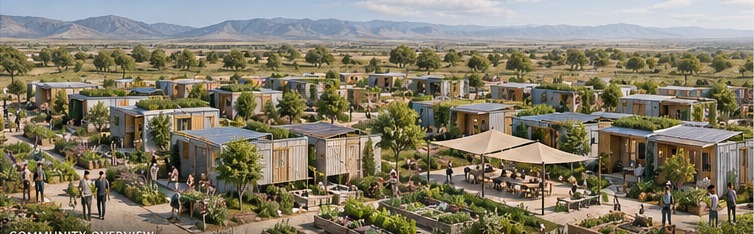
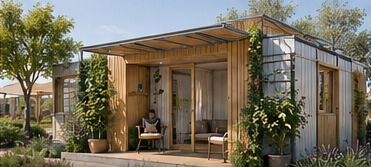
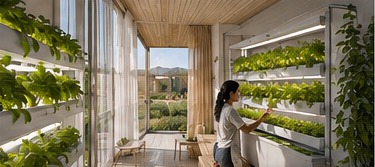
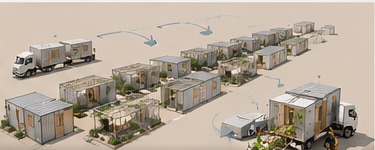
The design premise is simple: a temporary home can do more than keep weather out. It can support food security, dignity, recovery, community, and connection to nature.
A significant global need
Temporary settlements can become long-duration living environments. Julie’s research asks how emergency and refugee housing might support longer-term physical and psychological well-being without abandoning affordability or deployability.
Housing + food as one system
Potential elements include vertical hydroponic growing walls, rainwater collection, passive solar strategies, modular expansion, recycled materials, and shared garden infrastructure. The intent is to study housing and food production as connected systems rather than separate interventions.
Human-centered recovery
Biophilic design and access to greenery are treated as essential components of the environment. The research direction considers how landscape, planting, social space, and self-sufficiency could support resilience and community in difficult circumstances.
An innovation platform
The concept is intentionally pre-prototype. Research would test hydroponic integration, circular-economy principles, passive strategies, rapid-deployment construction, maintenance requirements, cost, cultural context, and real-world humanitarian logistics.
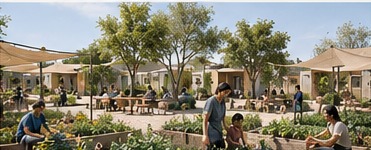
Research needs real-world partners.
Julie is interested in conversations with governments, NGOs, relief organizations, universities, manufacturers, and funders who could help move the idea from research to prototype.
Discuss the conceptAll images on this page are conceptual visualizations and do not depict an existing or commissioned project.